
Mobile Elbow Physical Therapy in Scottsdale
We come to you in Scottsdale, Paradise Valley, Phoenix, Tempe, and Mesa.
The elbow lets you bend and straighten your arm, rotate your forearm, and hold steady when you push, pull, or grip. Because it works closely with the shoulder, wrist, and hand, pain here can affect everyday tasks like lifting, gripping, and typing.

Anatomy of the Elbow
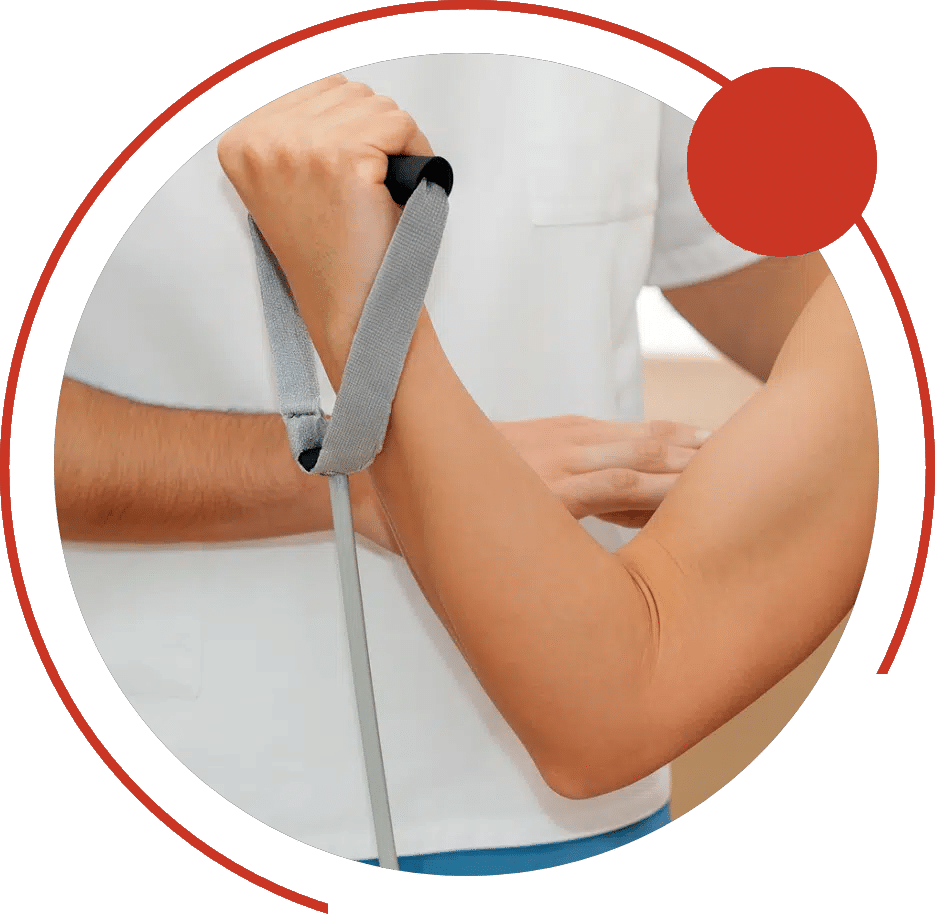
The elbow is where three bones meet: the humerus (upper arm bone) and the ulna and radius (forearm bones). Cartilage, ligaments, and muscles support these bones and guide their movement.
The elbow's main movements are bending (flexion) and straightening (extension). It also lets you turn your palm up (supination) and down (pronation). The biceps, triceps, and forearm muscles control these motions and keep the joint stable.
Mobility and Stability
The elbow needs enough mobility for precise movements and enough strength to handle the forces of pushing, pulling, and gripping. Compared to the shoulder, it gives up some range of motion in exchange for more stability.
Problems start when that balance is thrown off by overuse, injury, or poor mechanics. Too much motion without control can lead to strain and instability. Too much stiffness can limit movement and shift stress to the shoulder and wrist.
Common Causes of Elbow Pain
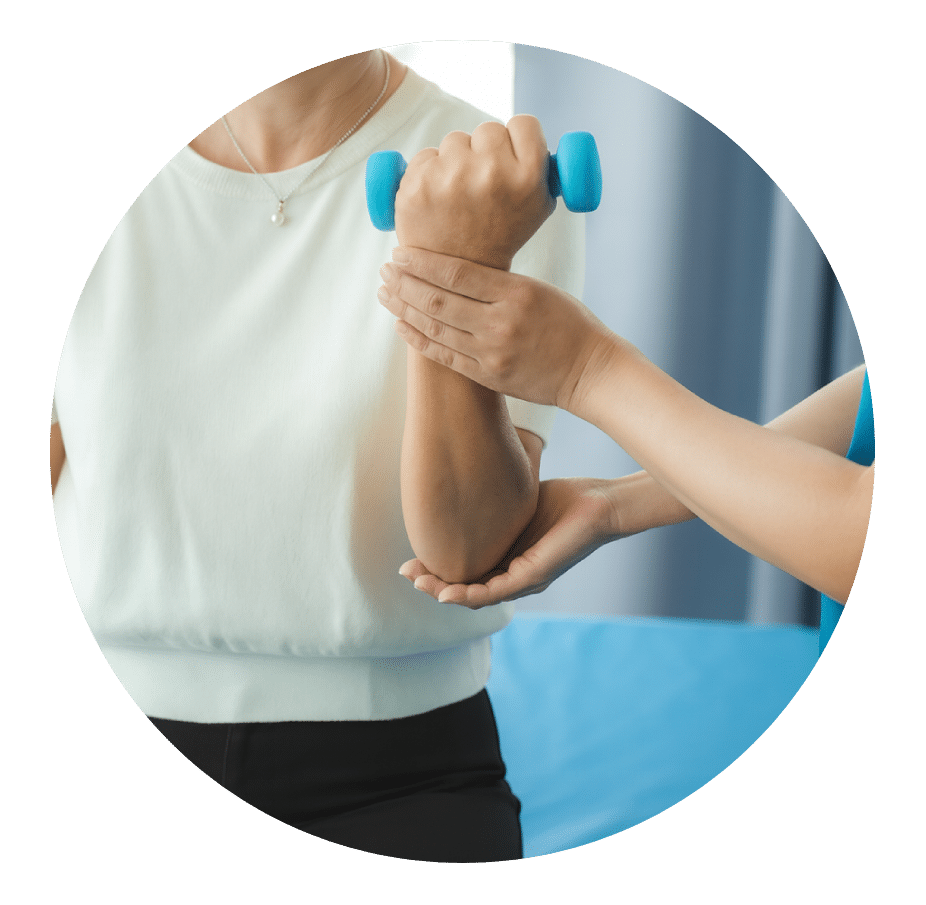
Elbow pain usually comes from repetitive stress, a sudden injury, or the demands of work or sports. Repetitive gripping, lifting, and twisting can overload the tendons and muscles that cross the joint. In grappling sports, armbars and falls onto an outstretched arm can also sprain ligaments or hyperextend the elbow.

Typical causes include:
 Tennis elbow (lateral epicondylitis)
- Golfer's elbow (medial epicondylitis)
- Ulnar nerve entrapment (cubital tunnel syndrome)
- Elbow bursitis (olecranon bursitis)
- Ligament sprains or tears (including the UCL)
- Hyperextension injuries
- Biceps or triceps tendon injuries
- Osteoarthritis
- Fractures or dislocations
Common symptoms include:
- Pain on the inside or outside of the elbow
- Pain with gripping, lifting, or twisting
- Tenderness over the bony points of the elbow
- Weak grip
- Stiffness when bending or straightening
- Swelling around the joint
- Numbness or tingling into the ring and pinky fingers
How Physical Therapy Helps You
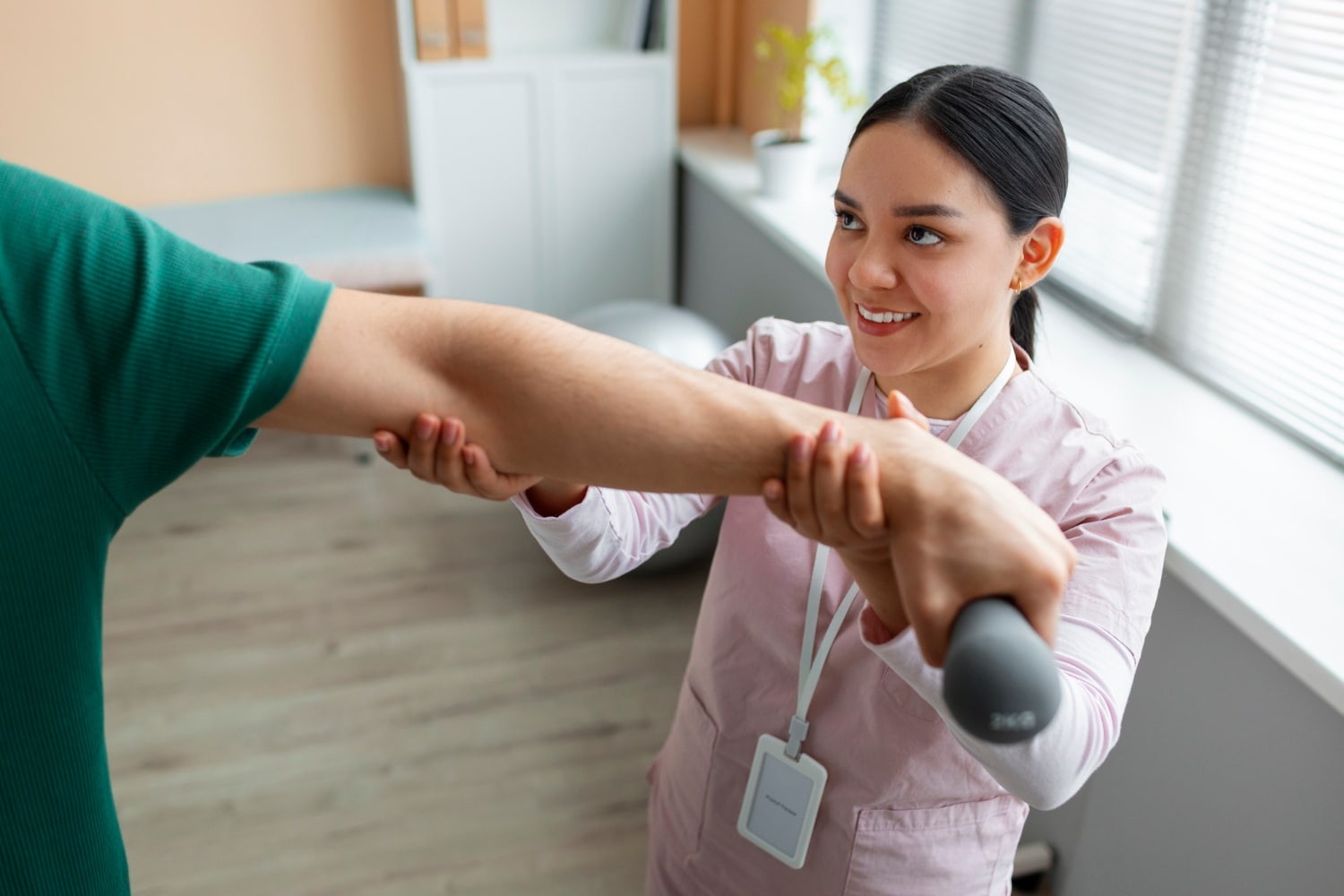
Elbow pain can make simple tasks hard, like holding a cup of coffee, carrying groceries, or using a mouse. Your physical therapist will start by evaluating your range of motion, strength, posture, and movement mechanics to find the cause of your pain. As a mobile practice, we come to you, whether that's your home, gym, or workplace.
Treatment often combines hands-on techniques to reduce irritation, targeted exercises to strengthen your forearm and shoulder, and ergonomic advice to change how you perform repetitive tasks. The goal is to relieve pain, restore full function, and keep the problem from coming back.
We also work with athletes, including grapplers, weightlifters, and golfers. Whether you're recovering from an armbar or dealing with grip-related tendon pain, we build your rehab around the demands of your sport so you can return to training with confidence.
You don't have to keep working around elbow pain. Contact us for a free phone consultation and to schedule your initial appointment.
Call NowFrequently Asked Questions
Tennis elbow is irritation of the tendons on the outside of the elbow, usually from repetitive gripping or lifting. Physical therapy focuses on reducing irritation and strengthening the forearm to restore normal function.
Golfer's elbow is irritation of the tendons on the inside of the elbow, where the muscles that bend your wrist and fingers attach. It usually comes from repetitive gripping, wrist bending, and twisting, so it's common in golfers, weightlifters, and grapplers. Physical therapy focuses on reducing irritation, gradually strengthening the forearm, and correcting the grip or swing mechanics that overload the tendon. If golf is your sport, learn more about our golf-specific physical therapy.
Yes. Armbars can sprain the elbow's ligaments or strain the surrounding muscles. Physical therapy can shorten your recovery time by restoring range of motion and strength sooner and guiding a safe return to rolling. If you notice significant swelling, bruising, or a feeling that the elbow is unstable, get evaluated before returning to training.
Yes. Because nerves and muscles run through multiple regions, pain felt in the elbow can sometimes originate from the neck, shoulder, or even the wrist. A thorough evaluation helps identify the true source.
Not usually. Complete rest may weaken the muscles further. Guided modifications and corrective exercises from a therapist are more effective for recovery.
Minor strains may resolve in a few weeks with therapy, while chronic tendon irritation can take several months of consistent care to fully heal.
Absolutely. Post-surgical rehabilitation is often critical for regaining range of motion, strength, and preventing stiffness after procedures like ligament repair or fracture surgery.
Ready to Move Better and Perform at a Higher Level?
Whether you have questions or are ready to get started, reach out and we'll get back to you promptly. You can also call or text us directly to speak with Dr. Phil Yoon.