

Temporomandibular Dysfunction (TMD)
Jaw pain, clicking, and stiffness often trace back to dysfunction in the temporomandibular joint (TMJ), the hinge connecting your jawbone to your skull. Our mobile physical therapy team treats TMD at the source with hands-on manual therapy, so you can chew, speak, and sleep without pain.
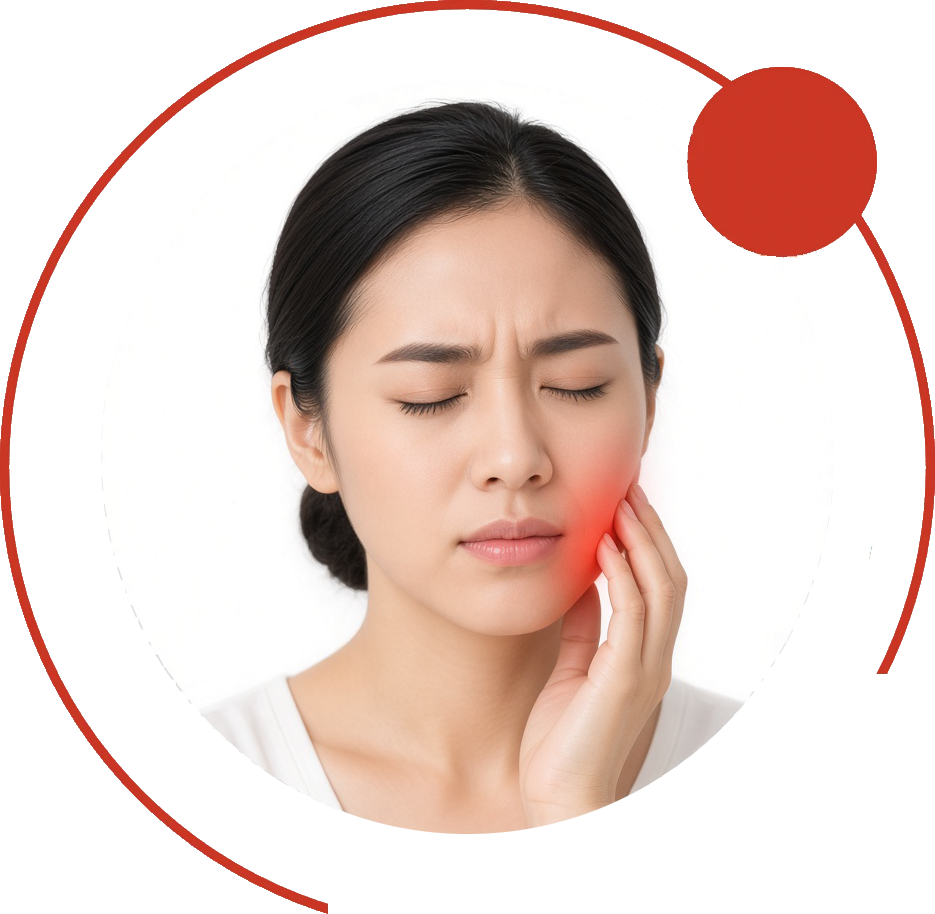
What Is TMJ/TMD?
The temporomandibular joint (TMJ) is the sliding hinge joint on either side of your jaw that connects your mandible to your skull, allowing you to chew, speak, and yawn. Temporomandibular dysfunction (TMD), sometimes called temporomandibular joint disorder, develops when that joint, the disc inside it, or the surrounding muscles of mastication stop moving the way they should.
TMD rarely stays isolated to the jaw. Because the joint shares nerve and muscular connections with the neck and upper back, dysfunction here frequently shows up as headaches, ear symptoms, and neck tension, which is exactly why a physical therapy approach that treats the jaw, cervical spine, and posture together tends to outperform treating the jaw alone.

Common Symptoms of TMD
 Jaw pain or tenderness, especially with chewing
- Clicking, popping, or grinding sounds in the jaw
- Jaw locking, either open or closed
- Limited range of motion when opening the mouth
- Frequent headaches or migraines
- Ear pain, ringing, or a sense of fullness
- Facial pain, tightness, or muscle fatigue
- Neck and shoulder tension linked to jaw clenching
What Causes TMD
- Bruxism (clenching or grinding teeth), often during sleep
- Forward head posture from prolonged desk or phone use
- Direct trauma to the jaw, face, or head
- Chronic stress held in the jaw and facial muscles
- Malocclusion or uneven bite alignment
- Arthritis or degenerative changes in the joint
- Prior dental work or prolonged jaw opening
How Mobile Physical Therapy Helps
Dr. Phil Yoon evaluates the full picture behind your jaw pain, not just the joint itself. Treatment blends hands-on manual therapy and myofascial release for the muscles of mastication, dry needling for chronically tight or overactive muscles, cervical spine mobilization to correct the postural habits that overload the jaw, and a guided home program of jaw mobility and relaxation exercises so progress holds between sessions.
Every session is one-on-one, 60 minutes, delivered wherever you are (your home, your office, or your gym) across Scottsdale, Phoenix, Paradise Valley, Tempe, and Mesa. No referral is required to get started.
Frequently Asked Questions
TMJ (temporomandibular joint) is the hinge joint connecting your jawbone to your skull on each side of your face. It's the joint itself. TMD (temporomandibular dysfunction, also called temporomandibular disorder) is the condition that occurs when that joint, and the muscles that move it, aren't working properly. In everyday conversation people often say "TMJ" to mean the disorder, but technically TMJ is the joint and TMD is the dysfunction.
Yes. The temporomandibular joint is a joint like any other, supported by muscles, ligaments, and fascia that can be assessed and treated with the same manual therapy, soft tissue work, and corrective exercise used for any other joint dysfunction. A physical therapist trained in TMD can address the muscular and postural contributors to jaw pain that often go untreated by dental splints alone.
Not necessarily. Some clicking without pain or limited motion isn't cause for concern. It's worth evaluating when clicking is accompanied by pain, locking, a noticeable decrease in how far you can open your mouth, or when the sound has changed or worsened over time.
We assess your jaw's range of motion and movement pattern, palpate the muscles of mastication and surrounding neck and shoulder muscles, screen your cervical spine and posture (since neck mechanics heavily influence jaw function), and review contributing habits like clenching, grinding, or chewing patterns. From there we build a treatment plan specific to what's actually driving your symptoms.
Treatment typically combines manual therapy to the jaw and cervical spine, myofascial release and trigger point work for the muscles of mastication, dry needling where appropriate, postural correction, and a home program of jaw mobility and relaxation exercises. Because posture and the neck are so closely linked to jaw mechanics, we usually treat the whole region rather than the jaw in isolation.
It varies by how long you've had symptoms and what's driving them, but many patients notice reduced pain and improved jaw movement within the first few sessions. Chronic or long-standing TMD, especially when bruxism or stress is a major factor, tends to take longer and benefits from consistent home exercises between visits.
Boundless Physical Therapy is a fully mobile practice. We bring one-on-one TMD treatment directly to your home, workplace, or gym across Scottsdale, Phoenix, Paradise Valley, Tempe, and Mesa. No waiting rooms, no rushed appointments, just focused, hands-on care in an environment that's convenient for you.
Ready to Move Better and Perform at a Higher Level?
Whether you have questions or are ready to get started, reach out and we'll get back to you promptly. You can also call or text us directly to speak with Dr. Phil Yoon.