Low Back
Mobile Physical Therapy for Lower Back Pain in Scottsdale
We come to you in Scottsdale, Paradise Valley, Phoenix, Tempe, and Mesa.
The low back, or lumbar spine, carries much of your body's weight and plays a role in nearly every movement you make. It works closely with your hips, pelvis, and core muscles, so problems here rarely happen in isolation. Even minor stiffness or strain can get in the way of sitting, lifting, training, or getting through your day.
Anatomy of the Low Back
The low back is made up of five lumbar vertebrae, labeled L1 through L5, stacked on top of each other. Between them sit intervertebral discs that act like cushions, absorbing shock and allowing smooth movement. Facet joints guide motion, ligaments hold the vertebrae together, and spinal nerves branch out to the hips and legs.
Several layers of muscle surround all of this, including the multifidus, erector spinae, quadratus lumborum, and the larger glute and core muscles. They work together to help you bend, lift, twist, and stay stable.
Stability and Mobility
The lumbar spine has to balance movement and stability. It lets you bend in every direction and rotate, but its main job is to protect the nerves in your spinal canal and support your entire upper body.
Problems start when that balance is thrown off. Too much motion without control can lead to strain, while too much stiffness can limit movement and shift stress to the hips or knees. For many people, this shows up as limited hip or mid-back mobility, core or glute weakness, or trouble handling load during lifting. Long periods of sitting, high training volume, or compensations from a past injury can all add to it.
Common Causes of Low Back Pain
Low back pain is one of the most common musculoskeletal complaints. It can come from a sudden injury or build up from long-term stress on the spine. In grappling, getting stacked, bridging under pressure, and holding guard for long rounds can all strain the low back.

Other causes of low back pain include:
 Lumbar strains or sprains
- Disc herniation or bulging discs
- Facet joint irritation
- Sciatica (irritated nerve root)
- Degenerative disc disease
- Spinal stenosis
- Spondylolisthesis
Common symptoms include:
- Aching or sharp pain in the low back
- Pain radiating into the buttocks, hips, or legs
- Tingling, numbness, or weakness down one leg
- Stiffness, especially in the morning
- Pain with lifting, bending, sitting, or standing
- Trouble walking, driving, or sleeping
- Tightness after training or long periods of sitting

How Physical Therapy Helps You
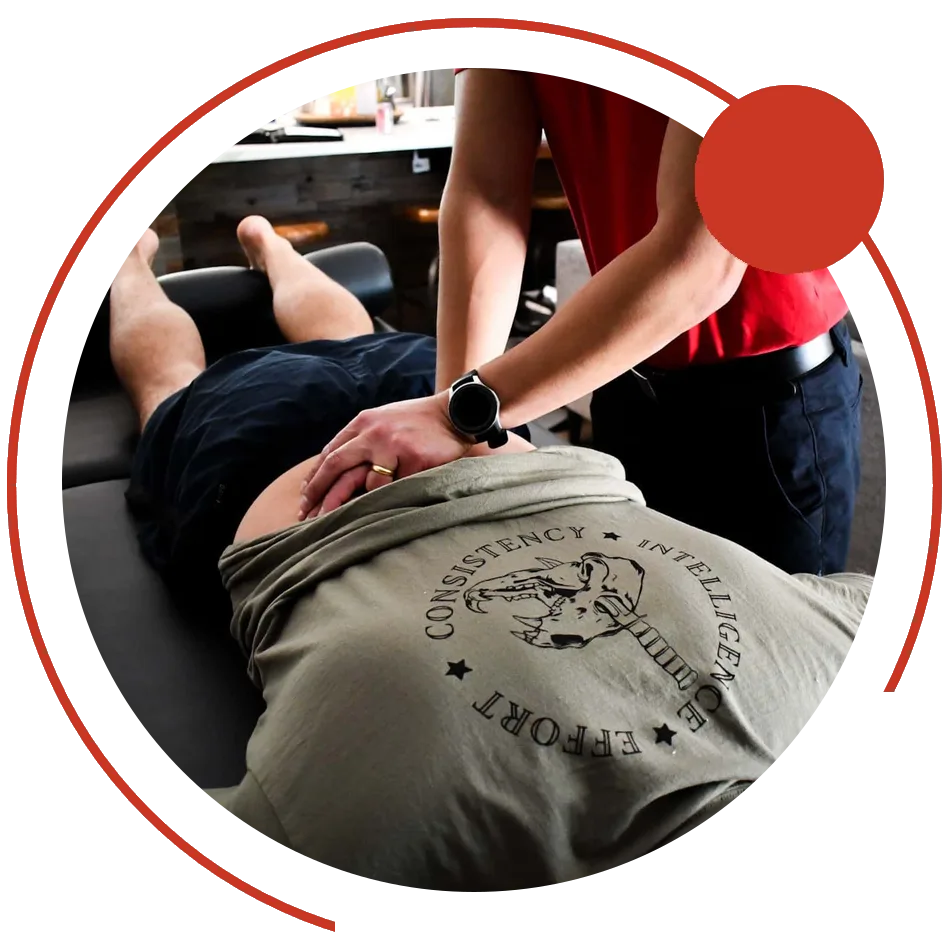
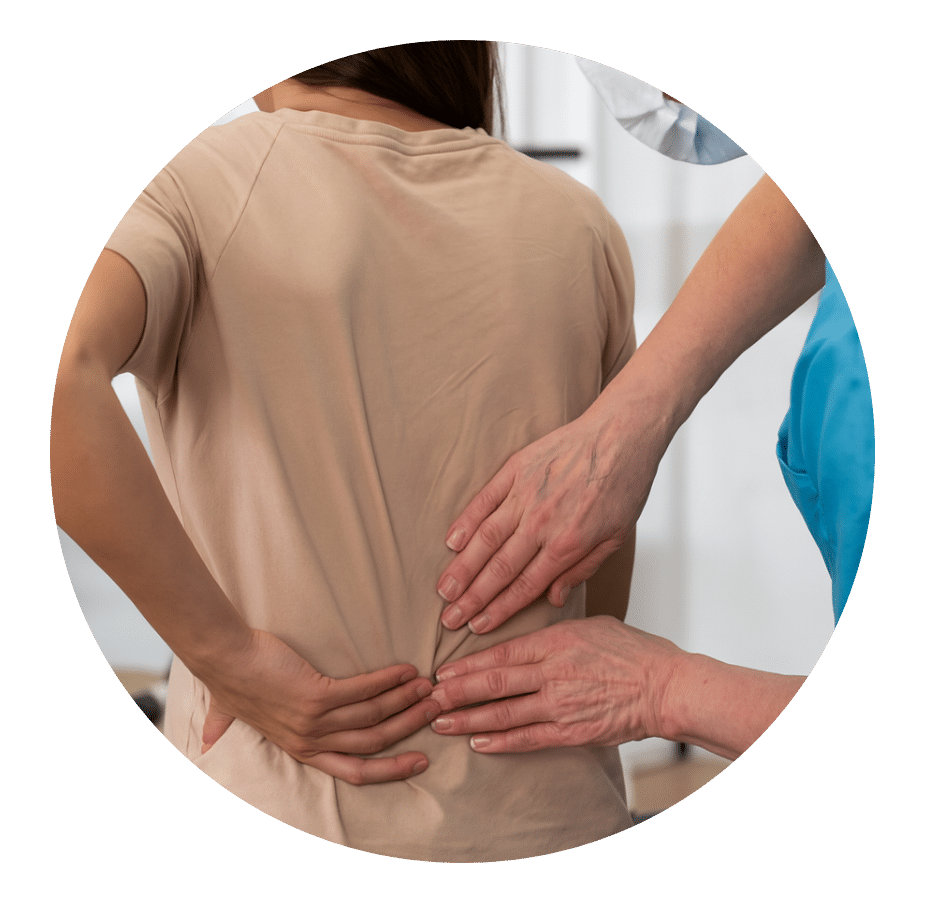
Low back pain can make simple tasks like sitting at a desk, driving, or sleeping painful. Your physical therapist will start with a thorough evaluation of your posture, strength, flexibility, and movement to find whether your symptoms are coming from the low back itself, referred from another area, or related to a nerve. As a mobile practice, we come to you, whether that's your home, gym, or workplace.
From there, your plan is built around your goals, whether that's lifting comfortably, training without hesitation, or getting through your day without pain. It may include hands-on treatment like soft tissue work, dry needling, or cupping, along with mobility work for your hips and spine and strength training for your core and glutes. We'll also look at how you lift, bend, and move in your sport. Recovering from back surgery? Learn more about our post-surgery rehab.
We also work with athletes whose sports load the low back, including grapplers, weightlifters, and golfers. We build your rehab around the positions required for your sport so you can return to training with confidence. If golf is your sport, learn more about our golf-specific physical therapy.
Low back pain isn't something you have to accept. Contact us for a free phone consultation and to schedule your initial appointment.
Call NowFrequently Asked Questions
Most low back pain comes from muscle strains, disc-related issues, or irritated joints. Long periods of sitting and inactivity can make it worse.
If your pain is constant, spreads into your legs, causes numbness or weakness, or doesn’t improve within a couple of weeks, get evaluated. Seek emergency care right away if you have new trouble controlling your bladder or bowels, numbness in your groin or inner thighs, leg weakness that’s getting worse, or back pain with a fever or after a serious fall or accident.
Yes. Physical therapy targets the underlying cause of your pain as well as the symptoms. By strengthening supporting muscles and improving how you move, it can reduce flare-ups and restore function.
Stay active in most cases. Bed rest is rarely recommended, and gentle movement, stretching, and guided exercise usually help you recover faster.
Recovery time depends on the severity and cause of your pain. Some people feel relief in a few sessions, while others need several weeks to restore full strength and mobility.
Often, yes, with some changes. Your physical therapist can help you adjust positions that aggravate your back, like getting stacked or long stretches of closed guard, while you build strength and mobility. If your pain spreads down your leg or you notice numbness or weakness, get evaluated before you keep training.
Ready to Move Better and Perform at a Higher Level?
Whether you have questions or are ready to get started, reach out and we'll get back to you promptly. You can also call or text us directly to speak with Dr. Phil Yoon.